
Blog
Best Camp Knife Guide: How to Choose the Right Knife for Camping

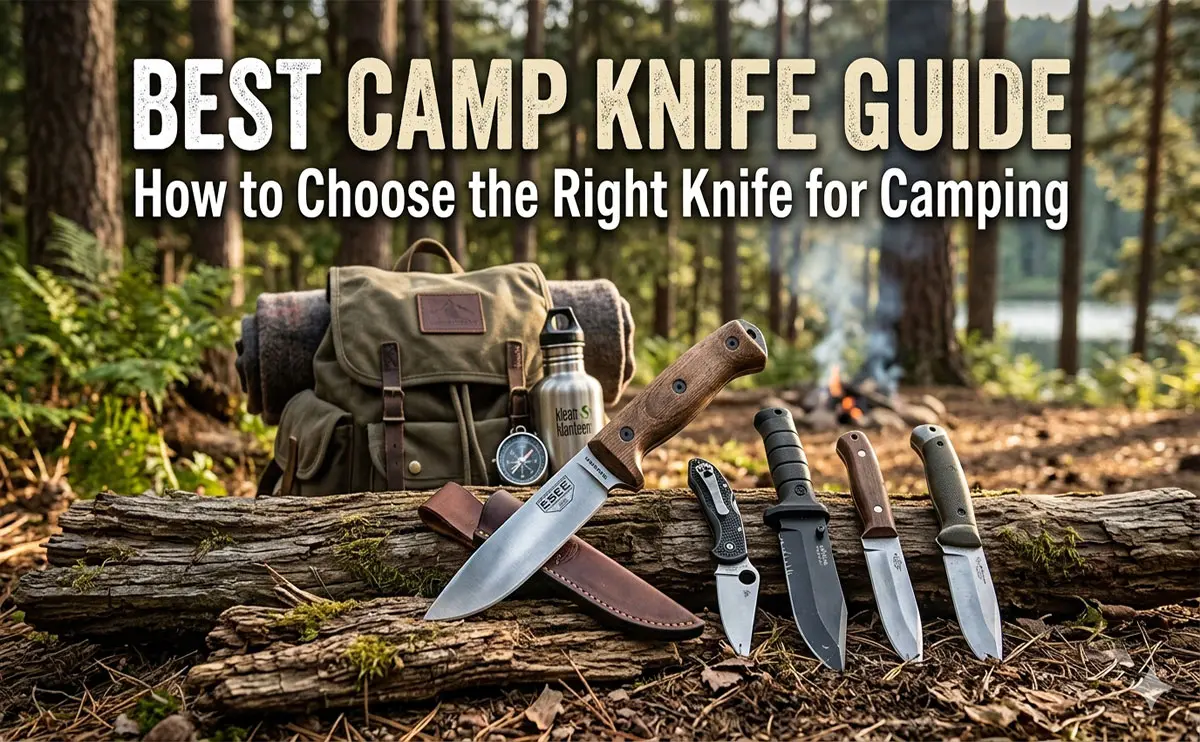
A good camp knife is one of the most useful tools you can bring outdoors. It helps with fire prep, food prep, cord cutting, light wood processing, and general campsite tasks. But not every outdoor knife is built for the same job.
Some knives are designed for survival emergencies. Others are made for fine bushcraft carving. A true camp knife sits in the middle: it should be strong enough for hard use, but practical enough for everyday campsite work.
In this guide, we break down what a camp knife is, how it differs from survival and bushcraft knives, which blade shapes and steels work best, and what features actually matter in real-world outdoor use.
What Is a Camp Knife?
A camp knife is a general-purpose outdoor knife designed for common campsite tasks such as:
- Preparing kindling
- Cutting rope and paracord
- Food preparation
- Carving stakes or tools
- Basic gear repair
Unlike a survival knife, which is built around worst-case scenarios, a camp knife is meant for planned outdoor living. That means comfort, control, slicing ability, and versatility matter just as much as strength.
Camp Knife vs. Survival Knife vs. Bushcraft Knife
These categories overlap, but they are not the same.
Camp Knife
Best for general outdoor utility. A camp knife is usually balanced for food prep, light woodwork, and repeated daily use around camp. It often has a medium blade length and a thinner profile for better cutting performance.
Survival Knife
A survival knife is designed for emergency use in harsh conditions. These knives are often thicker, heavier, and built to handle brute-force tasks like batoning, prying, and shelter building. The tradeoff is that they are usually less efficient for slicing and food prep.
Bushcraft Knife
A bushcraft knife is more specialized for woodcraft. It shines in carving, notching, feather sticking, and traditional camp skills. Many bushcraft knives use a Scandi grind, which performs well on wood but is less ideal for kitchen-style cutting.
What Makes a Good Camp Knife?
The best camp knife balances durability, cutting efficiency, comfort, and ease of maintenance. For most campers, these are the key features to look for.
1. Blade Length
A blade between about 3.5 and 6 inches is the sweet spot for most camp use. This size is large enough for wood processing and food prep, while still being easy to control.
2. Blade Thickness
For a true camp knife, thinner is not always weaker. Many camp knives perform best in the 3 mm to 5 mm range, which offers a useful balance between slicing ability and toughness. Extremely thick blades may feel strong, but they often cut poorly in everyday tasks.
3. Blade Shape
Drop point blades are one of the best options for camp use because they combine a strong tip with enough belly for slicing. This makes them practical for everything from rope cutting to food prep.
Other blade profiles can work, but they are usually more specialized:
- Clip point: Better for fine detail, but a weaker tip
- Nessmuk: Great slicer for food and game processing
- Tanto: Strong tip, but not ideal for general camp cutting
- Spear point: Balanced, but less common for camp utility
4. Grind Type
The grind affects how the knife moves through material.
For general camping, a flat grind is often the most versatile because it slices cleanly through food, rope, and light wood. A convex grind offers more support for harder use, especially when batoning. A Scandi grind is excellent for carving wood, but less practical as an all-around camp edge.
5. Tang Construction
If you want a dependable fixed blade for camp use, full tang construction is usually the safest bet. A full tang runs through the entire handle and helps the knife handle impact more reliably during tougher tasks.
Best Steel for a Camp Knife
Blade steel affects edge retention, corrosion resistance, toughness, and sharpening difficulty. There is no perfect steel for everyone, but there are clear tradeoffs.
Carbon Steel
Carbon steels such as 1095 are popular because they are tough and easy to sharpen in the field. The downside is maintenance: they can rust quickly if left wet or dirty, especially in humid or coastal environments.
Best for: Users who value toughness and easy sharpening, and do not mind maintenance.
Stainless Steel
Modern stainless steels offer much better corrosion resistance and are usually the better choice for wet climates, food-heavy trips, or lower-maintenance ownership. Steels like 14C28N are widely appreciated for balancing toughness and rust resistance.
Best for: Most campers, anglers, and anyone who wants easier upkeep.
Premium Powder Steels
Higher-end steels such as MagnaCut are designed to combine excellent corrosion resistance with strong toughness and edge retention. For buyers willing to spend more, these steels can offer a very strong all-around performance package.
Best for: Premium buyers who want high performance with fewer compromises.
Best Handle Materials for Outdoor Use
The handle matters more than many buyers realize. A knife that looks good but creates hot spots or slips when wet will quickly become frustrating in the field.
G10
G10 is durable, water-resistant, and stable in changing weather. It is a strong choice for users who want a low-maintenance handle with solid grip.

Micarta
Micarta has a warmer, more natural feel than G10 and is often praised for its grip, especially in wet conditions. Many experienced users like it for long-term comfort.

Wood
Wood handles look classic and feel natural, but they usually require more care and are more affected by moisture unless stabilized.

Rubberized Handles
Rubberized materials can provide excellent grip and shock absorption, particularly for budget-friendly knives. The tradeoff is that some compounds may degrade faster over time.
What Tasks Should a Camp Knife Handle?
A well-chosen camp knife should handle the majority of routine camp chores without feeling too bulky or too fragile.
Fire Preparation
Camp knives are commonly used for:
- Splitting kindling by batoning
- Making feather sticks
- Scraping a ferro rod with a sharp spine
These tasks demand a knife that is strong, controllable, and comfortable under repeated use.
Food Preparation
If your knife cannot slice meat, cut vegetables, or clean fish comfortably, it may be too thick or too specialized. Camp knives should still perform well in camp kitchen tasks, especially on multi-day trips.
Camp Setup and Repairs
From cutting cordage and trimming straps to basic campsite adjustments, a camp knife often ends up being the tool you reach for most.
Fixed Blade or Folding Knife?
For most serious camp use, a fixed blade is the better option. It is simpler, stronger, and easier to clean. If you plan to baton wood, process kindling, or rely on the knife as a primary campsite tool, a fixed blade is usually the smarter choice.
A folding knife can still work well for lightweight camping, hiking, or backup carry, especially when pack weight matters more than hard-use strength.
Why the Sheath Matters
A knife system is only as good as its sheath. Safe carry, secure retention, and quick access all matter outdoors.
Kydex
Kydex is durable, water-resistant, and easy to clean. It is a practical choice for wet or dirty environments and is popular on modern technical camp knives.
Leather
Leather offers classic style and comfort, but it absorbs moisture and needs more care. It can also contribute to corrosion if a damp knife is stored in it for long periods.
Nylon
Nylon sheaths are usually affordable and lightweight, but they are often less durable and less secure than Kydex or quality leather.
Camp Knife Safety Basics
A camp knife should make outdoor tasks easier, not more dangerous. Good knife habits are essential.
A common safety rule is maintaining a clear safety zone before unsheathing or using the knife. Another key principle is always cutting away from the body and avoiding unsafe carving positions, especially when seated. Keeping the knife sharp also improves safety because a dull blade often requires more force and is more likely to slip.
How to Maintain a Camp Knife
Proper maintenance helps a good knife last for years.
- Clean and dry the blade after each trip
- Oil carbon steel before storage
- Do not leave a knife stored in a damp sheath
- Touch up the edge regularly instead of waiting until it is fully dull
Field sharpening can be done with compact diamond stones, ceramic rods, or improvised methods in a pinch, but routine care is the best way to avoid edge problems in the first place.
Best Camp Knife Types for Different Users
The best knife depends on how you camp.
For General Campers
Choose a medium-sized fixed blade with stainless steel, a full tang, and a flat or slightly convex grind. This setup offers a strong balance of durability, food performance, and low maintenance.
For Bushcraft-Focused Users
Look for a knife optimized for carving and woodcraft, often with a Scandi grind and a comfortable handle for prolonged use.
For Hard Use
A thicker fixed blade with strong steel, durable handle scales, and a secure sheath makes more sense if you expect heavy batoning or rough work.
For Lightweight Backpacking
A smaller fixed blade or durable folding knife may be enough if your focus is minimal weight and lighter camp chores.
Final Thoughts: How to Choose the Right Camp Knife
The best camp knife is not necessarily the biggest, thickest, or most expensive. It is the one that fits your actual outdoor use.
If you need one knife for general camping, prioritize:
- A versatile blade shape like drop point
- A practical size around 3.5 to 6 inches
- Reliable steel that matches your maintenance tolerance
- A comfortable, secure handle
- A sheath that is safe and weather-appropriate
For most users, a well-balanced camp knife will outperform an overly specialized knife in everyday outdoor situations. Strength matters, but so do comfort, control, and cutting efficiency.