
What Is a Knife Sheath? Types, Materials, and How to Choose One

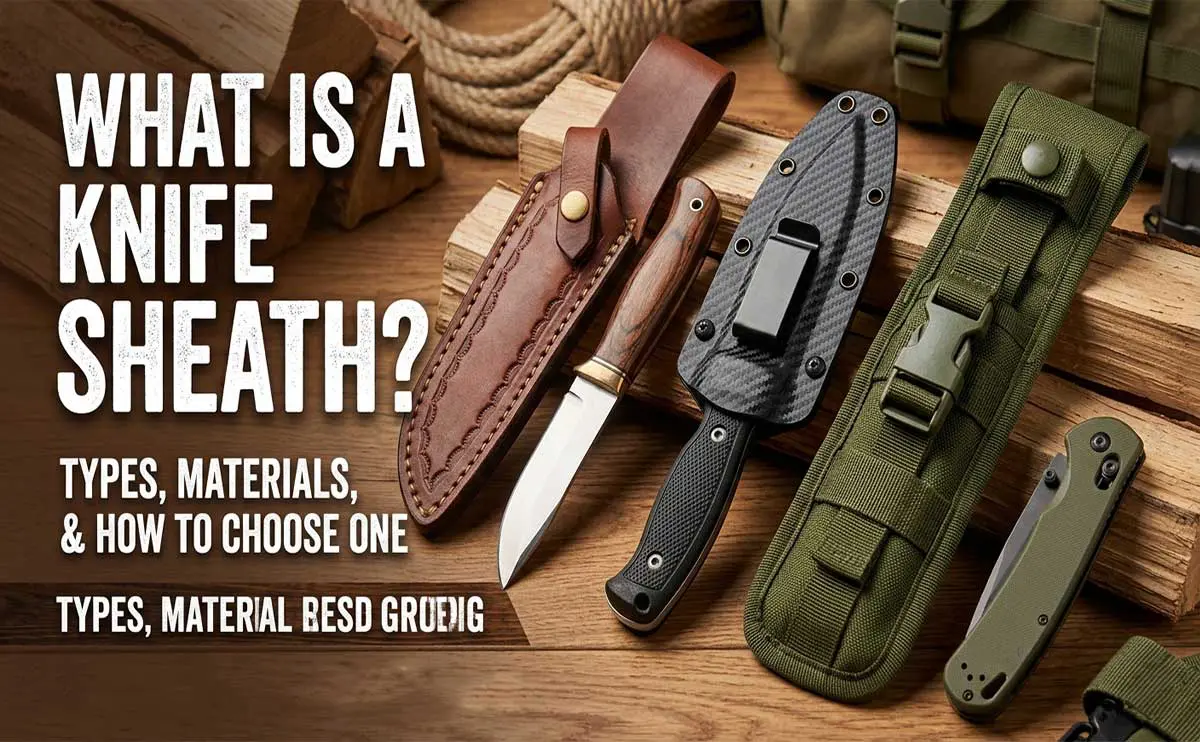
knife sheath is a protective cover that fits over a knife blade to improve safety, protect the edge, and make the knife easier to carry. In simple terms, it stores the knife securely when it is not in use and helps prevent accidental cuts, blade damage, and unnecessary wear.
For most users, a knife sheath does three jobs:
- Protects the blade from moisture, dirt, and impact
- Protects the user from accidental contact with the sharp edge
- Makes carrying safer and easier on a belt, pack, vest, or in storage
Why a Knife Sheath Matters
A sheath is not just an accessory. It is an important part of using a fixed-blade knife safely and effectively. Without a proper sheath, a knife is harder to carry, more likely to get damaged, and more dangerous to handle.
A good sheath should:
- hold the knife securely
- allow smooth drawing and re-sheathing
- reduce movement and rattling
- help protect the blade from rust, scratches, and debris
What Does a Knife Sheath Do?
If you are asking, “what is a knife sheath used for?” the answer is straightforward: it keeps the knife secure when you are not using it.
Depending on the design, a sheath may also offer:
- retention, which keeps the knife from falling out
- carry options, such as vertical belt carry or scout carry
- drainage, which helps moisture escape
- extra utility, such as a ferro rod loop or sharpening feature on some survival setups
Main Types of Knife Sheaths
Leather knife sheaths
Leather sheaths are a traditional choice. They are quiet, attractive, and popular with hunters, outdoorsmen, and collectors. Over time, leather can develop a custom fit and a worn-in look many users like. The downside is that leather can absorb moisture and needs regular care.
Best for: hunting, traditional carry, classic knives

Kydex knife sheaths
Kydex is a molded thermoplastic known for strong retention and water resistance. Many users prefer it for tactical, survival, and hard-use knives because it offers a firm fit and low maintenance. It is usually louder on the draw than leather and can be less traditional in appearance.
Best for: tactical use, survival, wet environments, everyday hard use

Nylon knife sheaths
Nylon sheaths are lightweight, affordable, and common on utility and field knives. They often include straps, pockets, or modular attachment options. However, they usually rely on inserts or straps for retention rather than a tight molded fit.
Best for: budget-friendly carry, general outdoor use, modular setups

Parts of a Knife Sheath
Understanding the basic parts can help you choose a better sheath.
Throat
The throat is the opening where the knife enters the sheath. It helps guide the blade in safely.
Body
The body is the main section that covers the blade and forms the overall structure of the sheath.
Welt
A welt is an extra layer, usually found in leather sheaths, placed along the seam to protect the stitching from the knife edge. This is one of the most important quality features in a leather sheath.
Tip or chape
This is the bottom end of the sheath, where the knife point rests. It helps prevent punctures and wear. Some modern sheaths also include a drainage hole here.
Retention system
Retention is what keeps the knife in place. Some sheaths use friction alone, while others add a snap strap or mechanical lock.
Common Carry Styles
The best knife sheath also depends on how you want to carry it.
Vertical belt carry
This is the most common style. The sheath hangs straight down from the belt and is easy to access for general outdoor use.
Scout carry
Scout carry places the sheath horizontally on the belt. Many people like it for hiking, sitting, or driving because it stays out of the way.
Dangle carry
A dangle setup lets the sheath hang lower from a flexible loop. This can make a knife easier to access when wearing a long jacket or backpack hip belt.
Neck carry
Usually used for small knives, neck carry offers concealment and quick access, but it is not ideal for larger blades.
How to Choose the Right Knife Sheath
When choosing a knife sheath, focus on these factors:
1. Knife size and shape
A sheath should match the exact blade profile and handle design for safe retention and easy use.
2. Material
Choose leather for tradition and quiet carry, Kydex for durability and retention, or nylon for affordability and versatility.
3. Retention
If you are active, working outdoors, or moving through rough terrain, stronger retention matters.
4. Carry preference
Think about where and how you want to wear the knife: belt, pack, vest, neck, or horizontal carry.
5. Environment
Wet, muddy, or humid conditions often favor synthetic sheaths, while dry field use may work well with leather.
How to Maintain a Knife Sheath
Proper maintenance helps the sheath last longer and protects the knife too.
Leather sheath care
Leather sheath care
- let it air dry if wet
- condition it occasionally
- avoid storing a knife in a damp leather sheath for long periods
Kydex sheath care
- rinse out grit and sand
- clean with mild soap and water
- check for trapped debris that could scratch the blade
Nylon sheath care
- hand wash gently
- let it air dry fully
- inspect straps and liners for wear
Should You Store a Knife in Its Sheath?
Usually, a sheath is best treated as a carry tool, not a long-term storage solution. Leather can hold moisture and certain residues, and even synthetic sheaths can trap humidity over time. For long-term storage, it is better to clean and dry the knife and store it outside the sheath.
Final Answer: What Is a Knife Sheath?
A knife sheath is a protective cover designed to hold a knife safely when it is not being used. It protects both the blade and the user, improves carry, and can affect access, retention, comfort, and long-term blade condition. Whether you choose leather, Kydex, or nylon, the right sheath makes a knife safer, easier to carry, and more practical in everyday use.
PREGUNTAS FRECUENTES
What is a knife sheath made of?
Most knife sheaths are made from leather, Kydex, nylon, or similar synthetic materials.
Is a knife sheath necessary?
For fixed-blade knives, yes. A sheath helps prevent injury, protects the edge, and makes safe carry possible.
What is the best material for a knife sheath?
It depends on use. Leather is classic and quiet, Kydex is durable and waterproof, and nylon is affordable and versatile.