
Blog
Clip Point vs Drop Point Blade: The Ultimate Technical & Practical Comparison

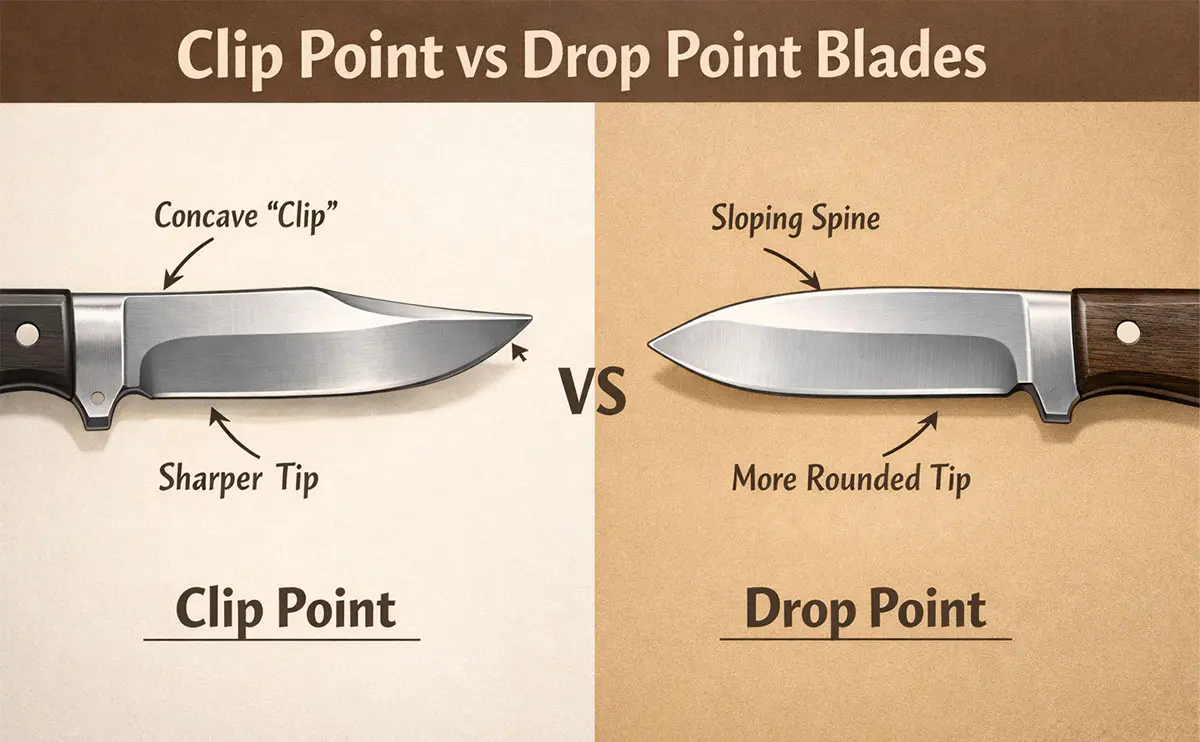
Which blade shape is better—clip point or drop point? This in‑depth guide breaks down the geometry, performance, history, and real‑world use cases of both blade types to help you choose the right knife for hunting, survival, EDC, or tactical applications.
Quick Verdict (TL;DR)
- Choose a Clip Point if you prioritize precision, piercing efficiency, and fine detail work.
- Choose a Drop Point if you need strength, durability, controlled slicing, and all‑around reliability.
Neither is universally better—the right choice depends on how you use your knife.
What Is a Clip Point Blade?
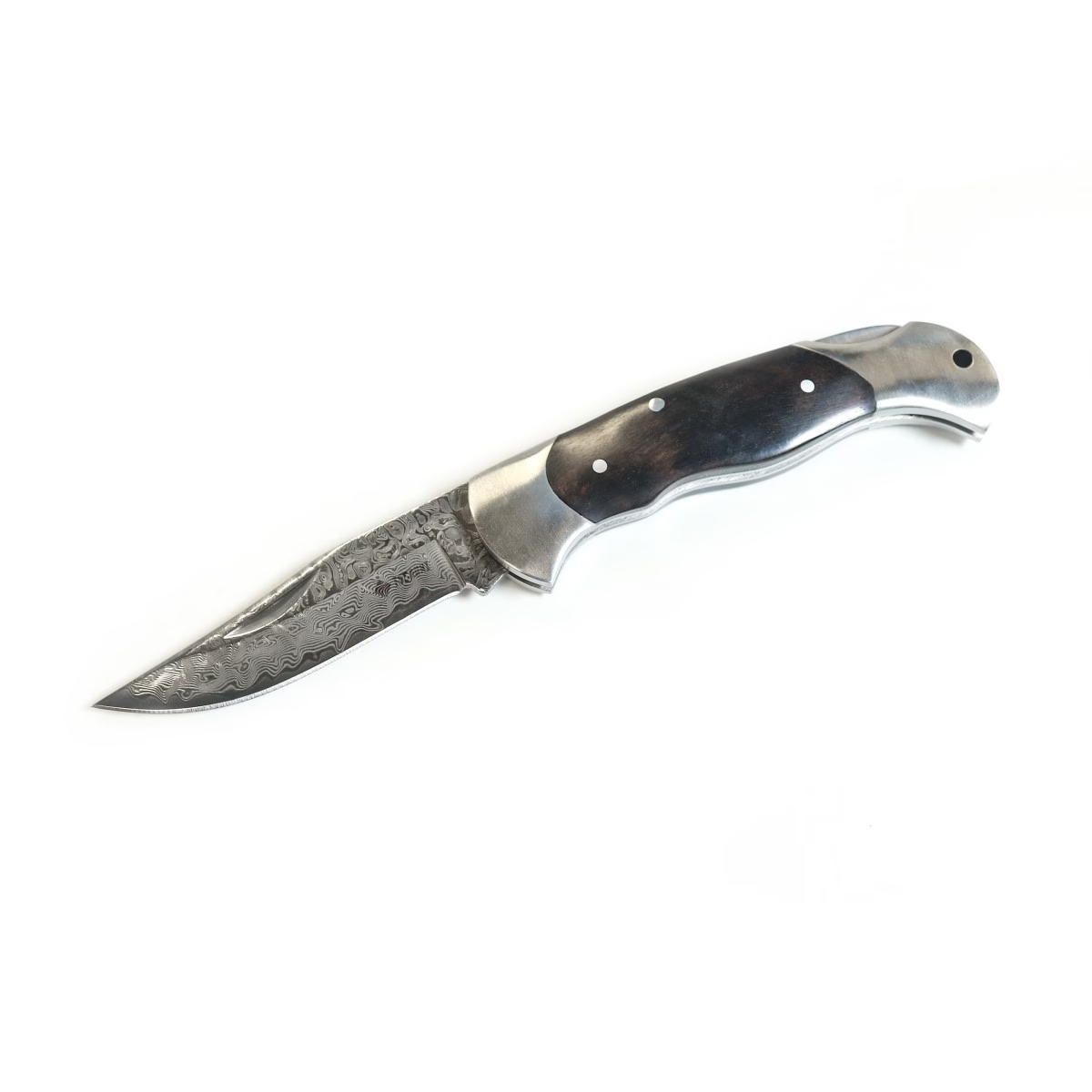
A clip point blade features a spine that runs straight from the handle and then clips downward near the tip, forming a concave or straight cut‑out.
Key Characteristics
- Thin, acute tip
- Excellent penetration
- Precise point control
- Slightly handle‑biased balance
Advantages
- Superior piercing and stabbing performance
- Ideal for fine detail work (leather, carving, caping)
- Nimble feel and fast tip response
Disadvantages
- Weaker tip under lateral stress
- Higher risk of snapping or chipping
- More difficult to sharpen without rounding the tip
Best Uses
- Tactical and combat knives
- Small‑game processing
- Precision cutting tasks
- Traditional folders
What Is a Drop Point Blade?
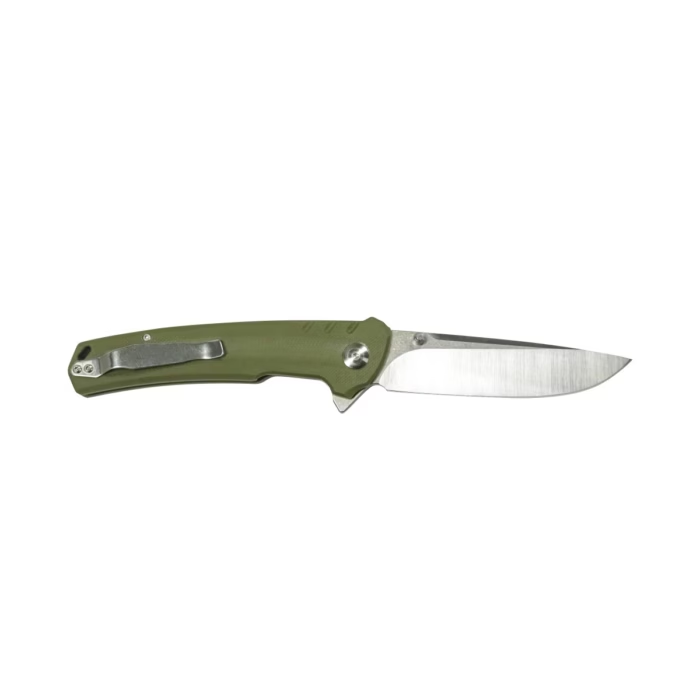
A drop point blade has a spine that slopes gradually downward in a convex arc from handle to tip. The point sits lower and is reinforced by thicker steel.
Key Characteristics
- Thick, strong tip
- Large cutting belly
- Excellent edge control
- Balanced mass distribution
Advantages
- Outstanding tip strength
- Safer for controlled slicing
- Easier to sharpen consistently
- Highly versatile
Disadvantages
- Slightly less piercing efficiency
- Less suited for ultra‑fine detail work
Best Uses
- Hunting and field dressing
- Survival and bushcraft
- Hard‑use EDC
- Wood processing and batoning
Clip Point vs Drop Point: Side‑by‑Side Comparison
| Feature | Clip Point | Drop Point |
|---|---|---|
| Spine Shape | Concave / clipped | Convex / sloping |
| Tip Strength | Moderate to weak | Very strong |
| Piercing Ability | Excellent | Good |
| Slicing Belly | Moderate | Large |
| Sharpening Difficulty | Higher | Easier |
| Best For | Precision & penetration | Strength & versatility |
Performance Breakdown
Piercing & Penetration
Clip point blades excel at penetration due to their thin, acute tips. Less steel behind the point means force is concentrated into a smaller surface area, allowing deeper and faster entry.
Drop points can pierce effectively but require more force because of their thicker tip geometry.
Tip Strength & Durability
Drop point blades dominate in strength. The convex spine reinforces the tip, making it resistant to snapping during prying, batoning, or joint work.
Clip points trade durability for sharpness and precision.
Slicing & Skinning
Drop points shine here. Their generous belly allows long, controlled slicing strokes—ideal for skinning large game or food prep.
Clip points are better suited for short, precise cuts rather than sweeping motions.
Hunting Applications
Field Dressing Large Game
Drop point wins. The lowered tip reduces the risk of puncturing organs, helping prevent meat contamination.
Caping & Trophy Work
Clip point wins. The sharp, narrow tip allows precise work around eyes, ears, and facial features.
| Task | Best Blade |
|---|---|
| Opening abdominal cavity | Drop Point |
| Skinning large animals | Drop Point |
| Small‑game cleaning | Clip Point |
| Caping / taxidermy | Clip Point |
| Joint separation | Drop Point |
Survival & Bushcraft
In survival scenarios, durability matters more than finesse.
Drop point knives handle:
- Batoning wood
- Prying frozen material
- Repeated impact
This is why knives like the Fallkniven F1 and Bark River Bravo 1 use drop point profiles.
Clip points are generally not recommended for heavy survival use.
Tactical & Self‑Defense Use
Clip point blades remain popular in tactical knives because they offer:
- Faster penetration
- Quicker tip engagement
- Better thrusting efficiency
Many tactical folders offer both shapes, acknowledging the trade‑off between penetration and durability.
Everyday Carry (EDC)
Drop Point for EDC
- More forgiving tip
- Less likely to snap
- Non‑threatening appearance
- Excellent all‑around utility
Clip Point for EDC
- Ideal for precision tasks
- Popular in traditional knives
- More aggressive aesthetic
Most users prefer drop points for daily carry due to safety, versatility, and public perception.
Sharpening & Maintenance
Clip Point Challenges
- Easy to round the tip
- Requires precise angle control
- Tip damage is harder to repair
Drop Point Advantages
- Broad, consistent edge
- Easier to maintain angle
- More steel for reprofiling
If you sharpen by hand, drop points are more beginner‑friendly.
Steel & Geometry Considerations
- Clip points benefit from tough steels (impact resistance matters)
- Drop points can prioritize edge retention and wear resistance
Common steels:
- CPM‑S30V, M390, VG‑10 (modern)
- 440C, ATS‑34, 1095 (classic)
Final Verdict: Which Blade Shape Should You Choose?
Choose a Clip Point if you want:
- Maximum piercing power
- Fine detail control
- Tactical or precision use
Choose a Drop Point if you want:
- Strength and reliability
- Safer, controlled cutting
- Hunting, survival, or EDC versatility
The reason both blade shapes still dominate the market is simple: each excels at what it was designed to do.
Understanding the geometry helps you choose the right tool—before you need it most.