
Damascus Steel Knives
No two patterns are exactly alike. Explore folding and fixed blades that bring together layered steel, thoughtful materials and a finish made to be seen.
Built to work. Finished to stand apart.
Damascus is chosen for more than its visual pattern. Properly made and heat-treated layered steel pairs practical cutting performance with the character of a collectible object.
A Pattern Unique to the Blade
Layering and etching reveal flowing contrasts across the steel, giving every knife its own visual identity.
A Refined Working Edge
Careful grinding and heat treatment create an edge suited to everyday cutting, outdoor use and collection.
Handles with Natural Warmth
Rosewood, ebony, bone, shell and modern composites complement the layered blade with tactile contrast.
Find Your Damascus Knife
Choose a compact folding knife for carry, a fixed blade for outdoor tasks, or a distinctive piece for your collection.
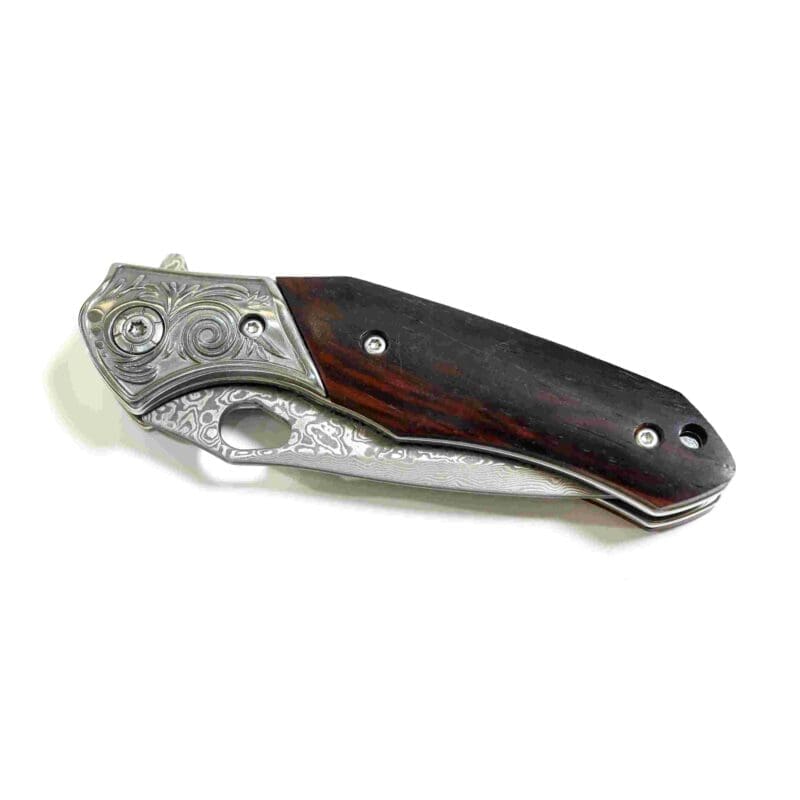
Damascus Folding Knife with Engraved Bolster
View knife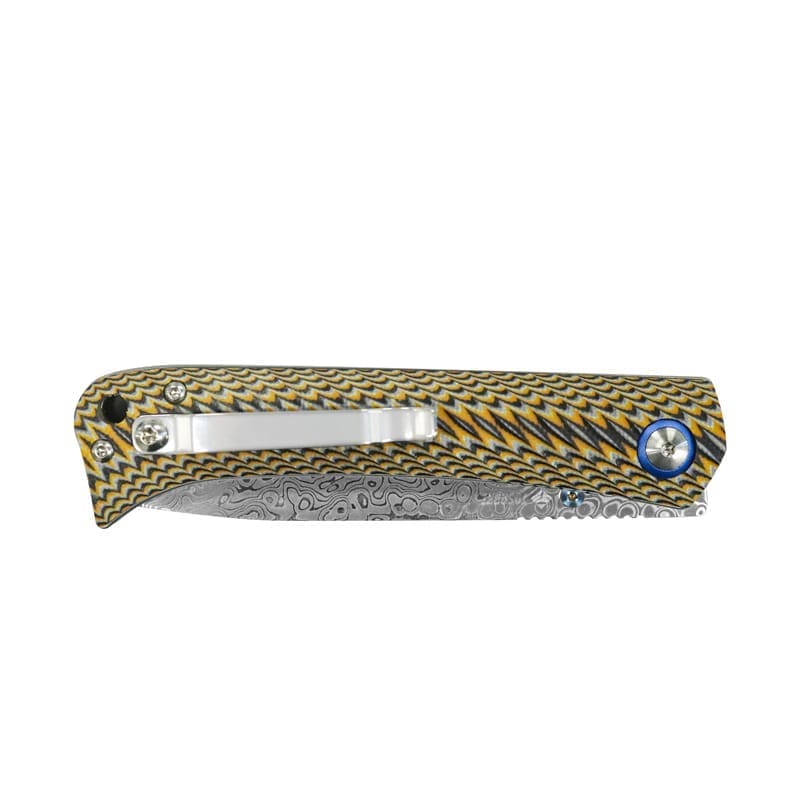
Contrasting G10 Handle Damascus Pocket Knife
View knife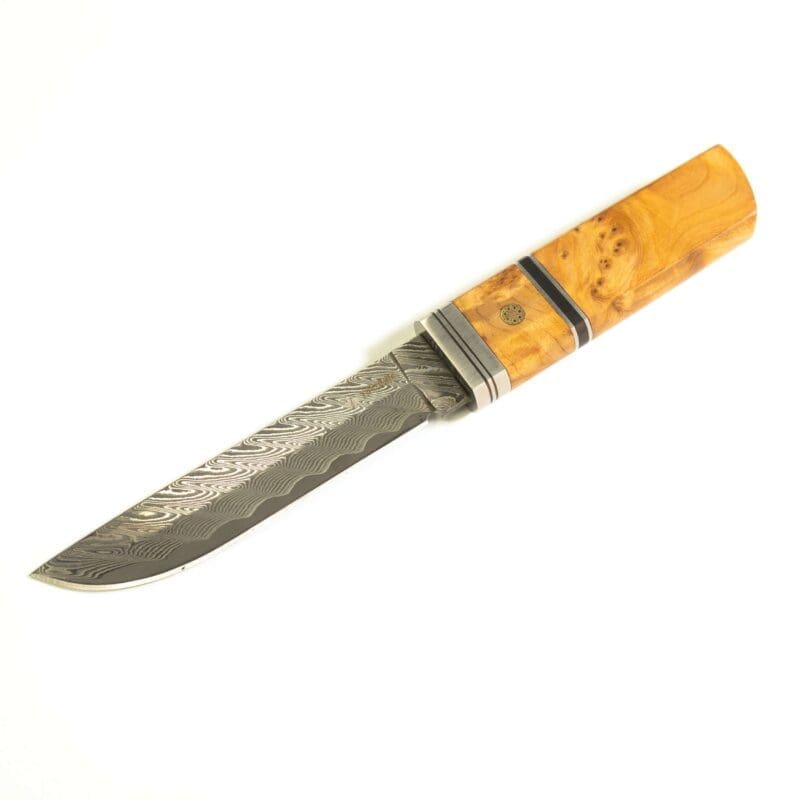
White Shadow Wood Handle Damascus Fixed Blade
View knife
Micro-Granulated Rosewood Damascus Pocket Knife
View knifeHow the Pattern Comes to Life
Alternating steels are joined, worked and finished through a sequence that builds the blade structure and reveals its signature pattern.
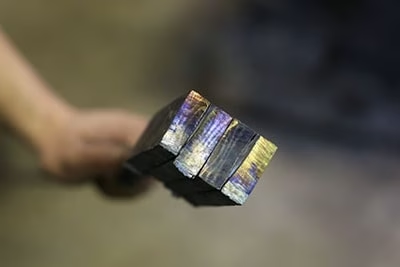
Billet Preparation
Alternating layers are stacked and prepared so they can be joined into a unified billet under heat and pressure.
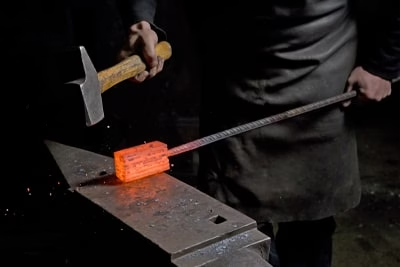
Forge Welding
The billet is brought to forging temperature and worked until the layers bond into a solid piece of steel.
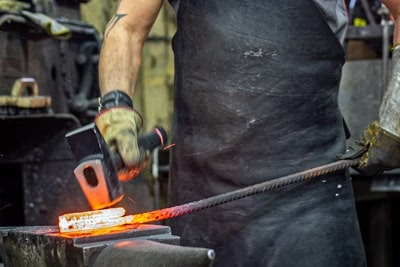
Drawing & Shaping
The material is drawn out and shaped. Grinding defines the blade profile before controlled heat treatment.
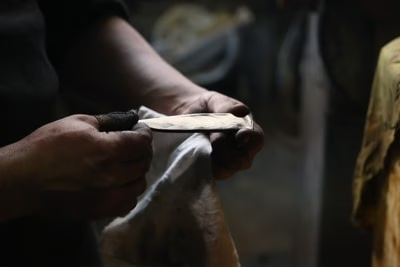
Etching & Finishing
Final polishing and etching bring out the contrast between the layers, followed by edge finishing and inspection.
What to Look for in a Damascus Knife
A beautiful pattern matters, but the knife should also provide clear materials, sensible construction and specifications that match the way you plan to use it.
-
Clear blade informationLook for the blade material, hardness and finish—not only a decorative name.
-
A pattern with natural variationLayered patterns flow and change rather than repeating like a uniform printed graphic.
-
Construction suited to your useChoose a folding knife for compact carry or a fixed blade when strength and simple maintenance matter most.
-
Real service after purchaseWarranty, returns and accessible support make the purchase easier to evaluate.
Keep the Pattern Looking Its Best
Damascus steel rewards a simple routine. A few careful habits help protect the finish and working edge between uses.
Clean After Use
Wipe the blade with a soft cloth after handling or cutting, especially after contact with moisture.
Dry Thoroughly
Do not leave the blade wet or soaking. Dry it completely before storage.
Apply Light Oil
Use a thin layer of suitable blade oil before longer storage to help limit oxidation.
Sharpen Carefully
Maintain the existing edge angle and avoid aggressive abrasives on the patterned blade surface.
Damascus Knife FAQ
Clear answers before you choose your blade.
What is modern Damascus steel?
Most modern Damascus knives use pattern-welded steel: two or more steels are joined and manipulated to form layers, then etched to reveal contrast. The exact composition and pattern vary by maker and model.
Is every Damascus pattern identical?
No. The layered pattern naturally varies from blade to blade. Product photos show the overall design, while the exact lines and contrast of the knife you receive may differ slightly.
Is Damascus steel suitable for everyday use?
Yes, when the knife's size, construction and edge geometry fit the task. Review each product's specifications to choose between compact folding designs and more substantial fixed blades.
Can Damascus steel rust?
Some layered steels can oxidize if left wet or exposed to corrosive materials. Clean and dry the blade after use, then apply a light protective oil for storage.
How should I sharpen a Damascus knife?
Sharpen the cutting edge using an appropriate stone or guided system while maintaining the factory angle. Avoid sanding or aggressively polishing the patterned blade face.
What is covered by Tosahwi's return and warranty service?
Unused items can be returned within the applicable 60-day policy window, and eligible manufacturing defects are covered by the limited lifetime warranty. Review the current policy pages for complete conditions.
A Working Blade with a Story in Every Layer
Explore Tosahwi Damascus folding and fixed blade knives, each selected for its balance of material, form and distinctive finish.