
Blog
Micarta vs G10 Knife Handles: A Materials-Science Comparison for Real-World Use

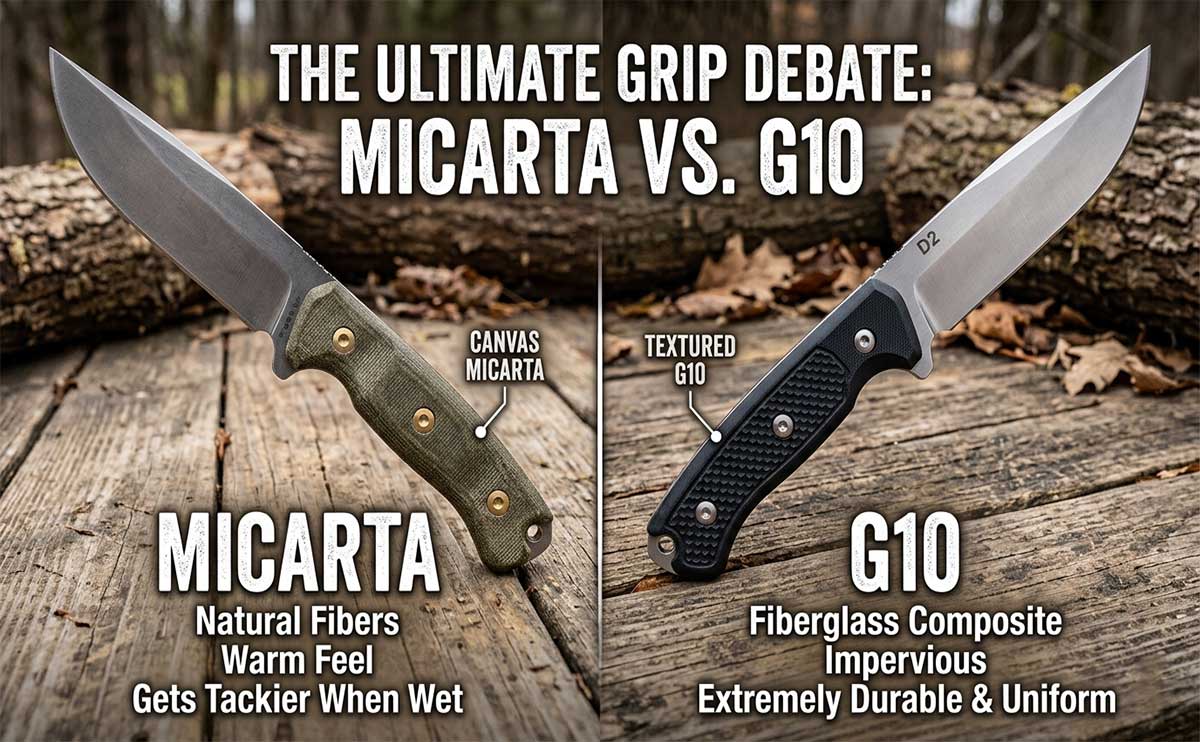
Choosing a knife handle used to be mostly about looks—wood, bone, stag, leather. Today, handle selection is a performance decision: grip under blood/water/oil, impact resistance, stability in heat/cold, hygiene, and long-term maintenance.
Two materials dominate modern professional knives:
- Micarta (fabric/paper + phenolic resin): “warm,” tactile, and develops patina.
- G10 (fiberglass + epoxy resin): ultra consistent, highly water-resistant, and engineered for maximum durability.
This guide breaks down Micarta vs G10 using chemistry, manufacturing, mechanical performance, ergonomics, and mission-based recommendations (EDC, bushcraft, tactical, and kitchen).
Quick answer: which is better—Micarta or G10?
- Choose Micarta if you want excellent wet grip, warmer feel in cold, vibration damping, and a handle that “breaks in” over time.
- Choose G10 if you want maximum strength, near-zero water absorption, chemical resistance, and a low-maintenance handle that stays the same for years.
There’s no universal “best”—only best for your environment and usage.
What Micarta and G10 actually are (and why that matters)
Both are high-pressure thermoset laminates: stacked reinforcement layers are impregnated with resin, pressed under heat/pressure, and cured into a dense composite slab.
Micarta structure
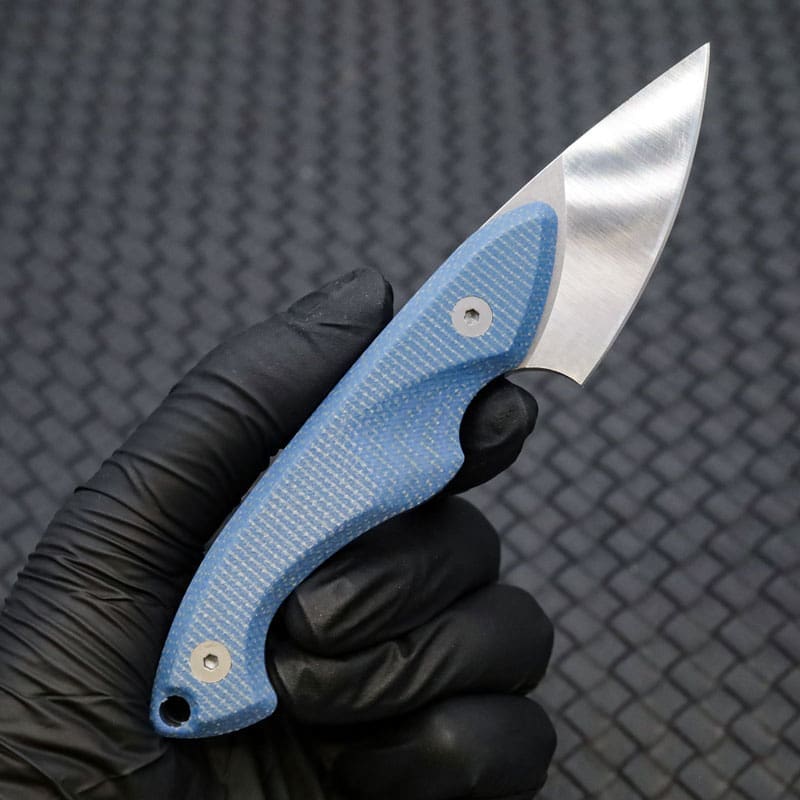
- Reinforcement: cotton canvas, linen, or paper
- Resin matrix: typically phenolic resin (thermoset)
- Personality: more organic “hand feel,” can darken and polish with use
Common types of Micarta:
- Canvas Micarta: most aggressive texture, excellent traction
- Linen Micarta: finer weave, smoother, still grippy
- Paper Micarta: densest and smoothest, can polish like “ivory”
G10 structure
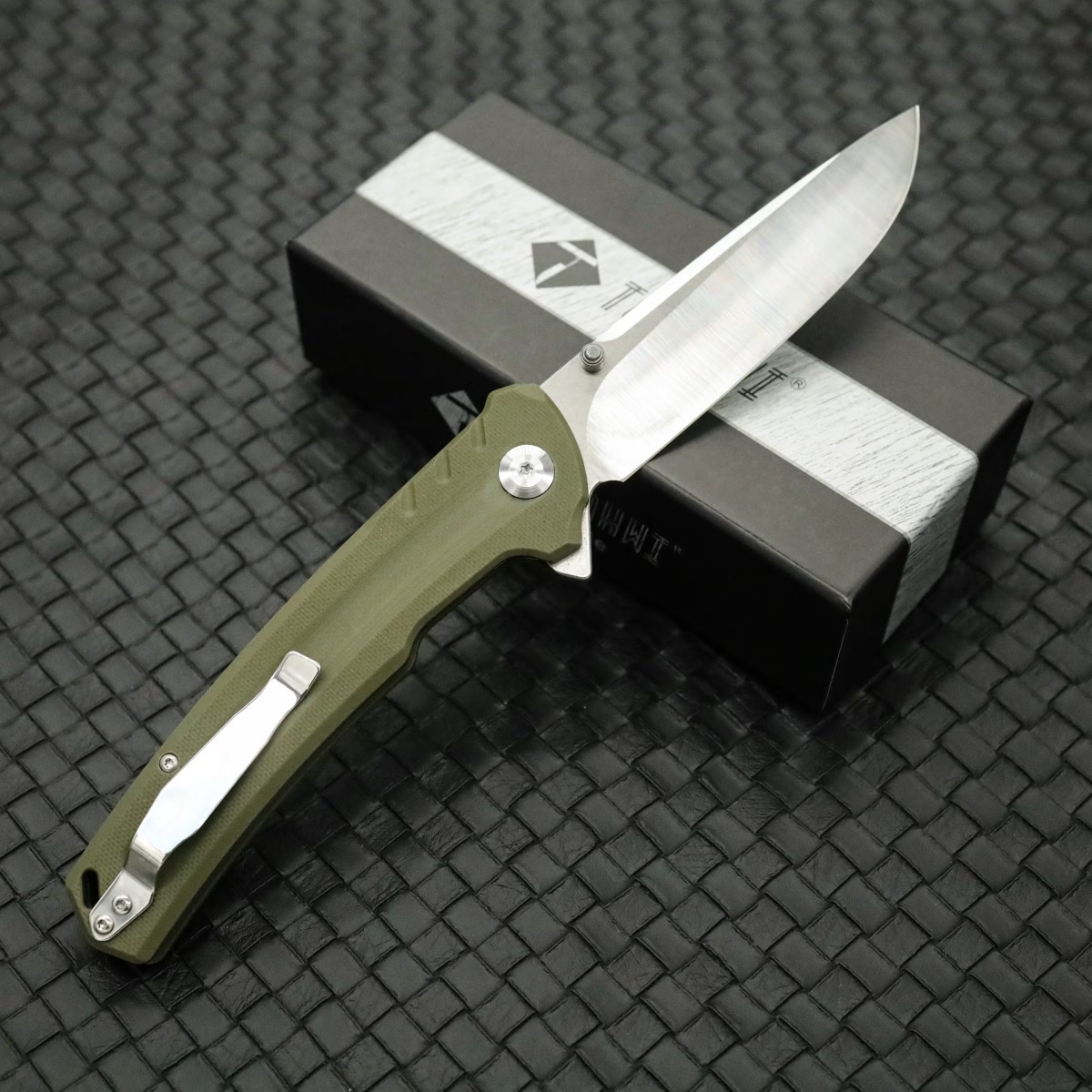
- Reinforcement: woven fiberglass cloth
- Resin matrix: epoxy resin
- Personality: rigid, dimensionally stable, and highly resistant to moisture/chemicals
Note: Many people say “G10” when they mean glass-epoxy laminates generally. In industrial contexts, related grades include FR-4 (a flame-retardant glass-epoxy laminate commonly used for circuit boards).
Resin science: phenolic (Micarta) vs epoxy (G10)
Phenolic resin (Micarta)
Phenolic systems cure into a hard cross-linked network that performs well under heat and mechanical wear. Trade-offs:
- Can be more brittle than many modern epoxies
- Can darken with UV and oils, creating Micarta’s sought-after patina
Epoxy resin (G10)
Epoxies typically provide:
- Strong adhesion to glass fibers (key to durability)
- Low porosity and chemical stability
- Better long-term resistance to water and aggressive cleaners
Mechanical performance: strength vs comfort under impact
In pure mechanical terms, G10 tends to be stronger and stiffer, largely because fiberglass is a high-strength reinforcement.
Where Micarta often wins is the “human factors” side:
- Slight compliance and shock damping can reduce fatigue during chopping/batoning
- Tactile feedback feels less harsh during extended use
Practical takeaway
- If your knife might be used for hard prying/abuse → G10 advantage
- If your knife is used for prolonged carving, field dressing, or repetitive outdoor cutting → Micarta advantage
Water resistance and hygiene
G10: near-waterproof behavior
Because fiberglass doesn’t absorb water and epoxy is very resistant, G10 is the safer choice for:
- Marine environments
- Constant wet use
- Professional kitchens with sanitizers and degreasers
Micarta: moisture-resistant, not always “waterproof”
Micarta is tough, but its organic fibers can wick moisture if the resin/fibers are exposed at the surface (especially after aggressive sanding or wear). Good Micarta is still highly durable—but it may:
- Darken with water/oils (often considered a feature)
- Require occasional sealing/oiling if you want a consistent look
Grip and ergonomics: the real reason people choose Micarta
Most buyers don’t choose handle materials because of tensile strength tables—they choose them because of grip confidence.
Micarta grip (especially canvas/linen)
Micarta often gets grippier when wet because surface fibers and micro-texture increase traction. This is why hunters and bushcrafters love it.
G10 grip
G10 can feel slick if polished, but modern knife makers solve this with:
- CNC texturing
- Checkering
- Peel-ply / “grippy” finishes
- Deep contouring
When textured well, G10 grip is extremely consistent across mud, sweat, oil, or blood.
Temperature feel: “warm” vs “cold” in hand
Even if both materials remain structurally stable, they can feel different:
- Micarta often feels warmer and less “plastic”
- G10 can feel colder/harder due to glass content and density
If you live in cold climates or use a knife barehanded in winter, Micarta’s feel can be a meaningful comfort advantage.
Machining & safety: what makers and modders need to know
Machining Micarta
- Generally easier to cut/sand
- Can scorch if overheated
- Dust is irritating—use PPE
Machining G10
- More abrasive → faster tool wear
- Requires strong dust control
- Dust can be hazardous (fiberglass particles) → respirator and extraction/wet sanding strongly recommended
Looks and aging: patina vs permanence
Micarta aesthetics
- Earthy, “handmade” vibe
- Develops patina: darkening + smoothing with hand oils and use
- Many enthusiasts prefer Micarta precisely because it changes
G10 aesthetics
- Huge color range and layered effects
- Stays consistent and clean-looking
- Great for tactical styling and bright/high-visibility builds
Best choice by use case (decision guide)
Tactical / duty / emergency
Pick G10 for maximum stability, water resistance, chemical resistance, and reliable texture.
Bushcraft / hunting / field dressing
Pick Micarta (canvas or linen) for wet grip, comfort, and vibration damping.
Kitchen knives (pro environments)
Lean G10 because it’s easy to sanitize and resists chemicals and moisture.
(If you’re writing for kitchen SEO, include “hygiene” and “sanitation” prominently.)
- Want pocket comfort + good grip? Micarta
- Want thinner, rigid scales + aggressive texture options? G10
Also mention: aggressive G10 textures can chew pockets.
Maintenance: how to keep Micarta and G10 looking good
G10 maintenance
- Wash with mild soap/water
- For grime in texture: soft brush + dish soap
- If it looks chalky: a tiny amount of mineral oil can improve appearance (wipe off fully)
Micarta maintenance
Micarta can look dry over time. Options:
- Mineral oil (food safe, stable)
- Light wax blends (adds water resistance and feel)
Avoid over-oiling—use a small amount and wipe down thoroughly.
Micarta vs G10 comparison table (reader-friendly)
| Feature | Micarta | G10 |
|---|---|---|
| Wet grip | Excellent (especially canvas/linen) | Excellent if textured |
| Dry grip | Very good | Excellent (especially aggressive textures) |
| Strength/stiffness | High | Very high |
| Water resistance | Good (can wick at surface) | Excellent (near waterproof behavior) |
| Chemical resistance | Good | Excellent |
| Feel in cold | Warmer | Colder/harder |
| Aging | Develops patina | Stays consistent |
| Maintenance | Occasional cosmetic care | Minimal |
| Machining | Easier | Harder + abrasive |
| Dust hazard | Irritant | Fiberglass hazard |
FAQs (add these to win long-tail traffic)
Is Micarta better than G10 for wet hands?
Often yes—Micarta (especially canvas/linen) can feel tackier when wet. Textured G10 can match or exceed it, but smooth/polished G10 may feel slick.
Does Micarta absorb water?
Micarta is generally moisture-resistant, but the fibers can wick small amounts if exposed at the surface. It usually won’t “fail,” but it can darken or feel different after soaking.
Is G10 slippery?
G10 itself is not automatically grippy—finish matters. Aggressively textured G10 is extremely secure; polished G10 can be slick with oil/water.
Which is more durable, Micarta or G10?
In most strength and water/chemical resistance metrics, G10 is more durable. In comfort, feel, and wet traction, Micarta often wins.
What’s the difference between G10 and FR-4?
They’re related glass-epoxy laminates; FR-4 is a flame-retardant grade commonly used in electronics. Knife handles may use G10-type laminates; “FR-4” is more of an industrial standard designation.