
Blog
Preventing Rust on High-Carbon Steel: The Best Oils and Storage Tips

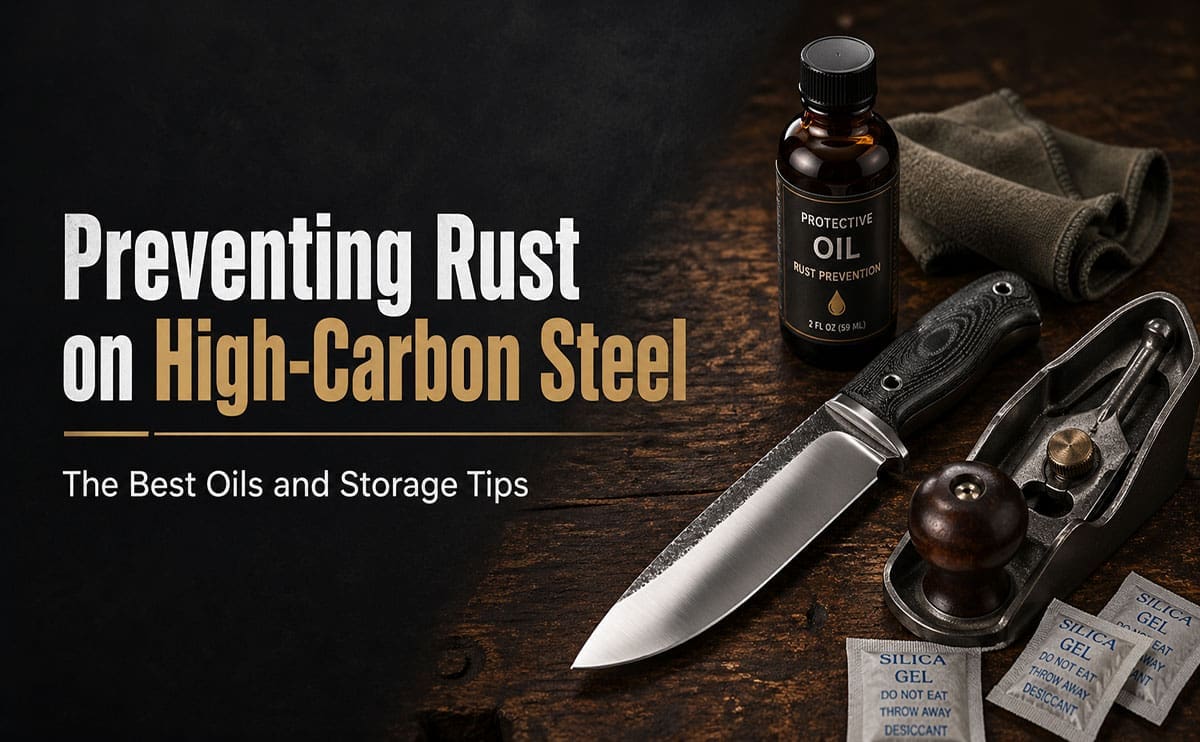
High-carbon steel is loved for one big reason: performance.
It takes a keen edge, sharpens beautifully, and develops character with use. That is why chefs, woodworkers, outdoorsmen, collectors, and bladesmiths continue to choose it over many stainless alternatives.
But high-carbon steel has a weakness that every owner learns quickly: it rusts fast if you neglect it.
A damp countertop, a fingerprint left overnight, trapped moisture in a sheath, or humid air in a garage can be enough to trigger corrosion. The good news is that rust prevention is simple once you understand the right protection routine.
This guide explains how to prevent rust on high-carbon steel, the best oils and waxes to use, and the smartest storage methods for knives, tools, and blades.
Why High-Carbon Steel Rusts So Easily
High-carbon steel contains iron and relatively low chromium compared with stainless steels. Stainless steel resists corrosion better because chromium helps form a protective oxide layer. Carbon steel does not have the same corrosion resistance, so moisture and oxygen can attack the surface more easily.
That means rust can form from:
- Humidity in the air
- Water left on the steel
- Acidic fingerprints
- Food residue
- Salt exposure
- Wet sheaths or cases
- Poor long-term storage
Even if the blade looks dry, moisture in the air can still start oxidation.
Common places rust starts
Rust usually appears first in neglected or hard-to-see areas, including:
- Edges and bevels
- Choils and spines
- Pivots and joints
- Tang areas near the handle
- Tool sockets
- Under residue or tape
- Areas touched by bare hands
The Best Way to Prevent Rust on High-Carbon Steel
If you want the short answer, it is this:
Keep the steel clean, dry, lightly protected, and stored in a low-humidity environment.
That basic rule beats most expensive products.
A reliable rust-prevention routine looks like this:
- Clean the steel after use
- Dry it immediately and completely
- Apply a thin protective coating
- Store it somewhere dry and breathable
- Inspect it regularly
Simple routines work better than occasional heavy treatments.

Best Oils for Preventing Rust on High-Carbon Steel
Not every oil is a good rust preventative. Some oils go rancid, some gum up over time, and some are unsuitable for food-contact tools.
Here are the best options depending on how you use your steel.
1. Food-Grade Mineral Oil
Best for: kitchen knives, carbon steel kitchen tools, food-contact blades
Food-grade mineral oil is one of the most practical choices for rust prevention. It is inexpensive, easy to find, easy to apply, and safe for tools that may contact food.
Why it works
Why it works
Mineral oil creates a thin barrier between the steel and moisture in the air. It does not dry into a sticky film as quickly as many plant-based oils, and it is easy to reapply.
Pros
- Food safe
- Affordable
- Easy to find
- Simple to wipe on
- Good for everyday maintenance
Cons
- Needs regular reapplication
- Not the strongest option for very long-term storage
For most home cooks, mineral oil is the easiest and safest place to start.
2. Camellia Oil
Best for: Japanese knives, chisels, hand tools, woodworking tools, collectible blades
Camellia oil has long been used for carbon steel maintenance, especially with Japanese tools and blades. It goes on light, leaves a clean protective film, and is popular among people who want a traditional blade-care option.
Why people like it
Why people like it
Camellia oil is light, easy to spread, and less messy than thicker protectants. It is especially popular for tools that are handled often and re-maintained regularly.
Pros
- Light, clean coating
- Good for fine tools and blades
- Traditional choice for carbon steel
- Pleasant for routine maintenance
Cons
- Costs more than mineral oil
- Still needs reapplication over time
If you own premium Japanese high-carbon knives or woodworking tools, camellia oil is an excellent option.
3. CLP or Gun Oil
Best for: outdoor knives, firearms components, field tools, non-food-use steel
Many gun oils and CLP-style products provide strong corrosion protection while also cleaning and lubricating moving parts.
Why it works
These products are designed for metal protection in varied environments, including storage and field use.
Pros
- Strong corrosion protection
- Good for metal parts with movement
- Useful for long-term storage of non-food tools
Cons
- Not appropriate for food-contact tools
- Some formulas have a stronger smell
- Can leave more residue than light oils
For shop tools, outdoor blades, and gear that sees rough conditions, a quality gun oil can be very effective.
4. Corrosion Inhibitor Products
Best for: coastal climates, garages, long-term storage, humid workshops
Specialized corrosion inhibitors are designed specifically to prevent oxidation in harsh environments. These are often stronger than basic household oils.
Good use cases
- Coastal homes
- Tropical climates
- Sheds and non-climate-controlled workshops
- Long-term storage for collectible or seasonal tools
Pros
- Stronger protection in harsh humidity
- Often lasts longer than light oils
- Good for storage-focused setups
Cons
- Usually not food safe
- Can be overkill for daily kitchen use
If humidity is your constant battle, a dedicated corrosion inhibitor may outperform standard oil.
Is Wax Better Than Oil for Rust Prevention?
Sometimes, yes.
Microcrystalline wax and other protective waxes are often better for long-term storage because they create a more durable barrier and attract less dust than oil.
Wax is best for:
- Display pieces
- Swords and collectible blades
- Tools stored for months at a time
- Steel kept in drawers, cabinets, or safes
Oil is best for:
- Frequently used knives and tools
- Food-contact items
- Situations where you want quick reapplication
A lot of experienced owners use both:
- Oil for regular maintenance
- Wax for long-term storage
That is often the most effective system.
Oils You Should Avoid on High-Carbon Steel
Some oils are commonly suggested online but are poor choices in practice.
Vegetable oils
Oils like olive oil, canola oil, and other cooking oils can oxidize, thicken, become sticky, and go rancid over time. They are not reliable long-term protectants.
Motor oil
Motor oil is not suitable for food-contact tools and is unnecessary for most blade care.
Thick grease for everyday use
Heavy grease can work for extreme preservation, but for regular use it often traps grime and makes maintenance unpleasant.
If you want consistent results, stick with a product meant for corrosion protection or a proven light protective oil.
How to Store High-Carbon Steel Without Rusting
The right storage habits matter just as much as the oil you choose.
You can oil a blade perfectly and still end up with rust if you store it in the wrong place.
1. Control humidity
Humidity is the real enemy.
Store high-carbon steel in a space with lower moisture whenever possible. A climate-controlled room is better than a damp basement, shed, or garage.
Helpful tools include:
- Silica gel packs
- Rechargeable desiccants
- Dehumidifiers
- Dry cabinets
- Humidity monitors
For long-term storage, reducing humidity often makes the biggest difference.
2. Never store carbon steel in leather long term
Leather looks great, but it is risky for storage.
Leather can trap moisture and contain tanning compounds that accelerate corrosion. A leather sheath is fine for carry or transport, but it is a poor place to leave a carbon steel blade for days, weeks, or months.
If you care about rust prevention, store the blade outside the sheath.
3. Use breathable storage materials
Good options include:
- VCI paper
- Wax paper
- Clean cotton rolls
- Silicone-treated gun socks
- Tool wraps designed for metal protection
Avoid sealing damp steel in plastic where condensation can get trapped.
4. Keep stored steel clean before protecting it
Do not apply oil over dirt, salt, fingerprints, or food residue.
That only seals contaminants against the surface.
Before storage, wipe the steel clean, dry it thoroughly, and then apply the protective layer.
5. Inspect your steel regularly
Even well-stored tools should be checked.
A quick inspection once every few weeks can catch:
- Orange haze
- Dark specks
- Water spots
- Sticky residue
- Early rust bloom
Rust is easiest to stop when it is still superficial.
Best Rust-Prevention Routine for Everyday Use
If you use your high-carbon steel regularly, this maintenance routine is simple and effective.
After each use
Wash only if needed, then dry immediately and completely. Apply a very light coat of oil before putting it away.
Once a week
Check for spotting, residue, and dryness. Reapply protection if the steel looks bare.
Once a month
Do a more careful wipe-down. Clean hidden areas, remove old buildup, and refresh the protective coating.
Every few months
Check your storage area. Replace desiccants, inspect wraps, and make sure humidity is still under control.
Consistency beats intensity.
How to Prevent Rust in Humid Climates
If you live near the ocean, in the South, in a tropical environment, or anywhere with persistent humidity, use a layered system.
A stronger setup looks like this:
- Clean and fully dry the steel
- Apply a corrosion inhibitor or protective oil
- Add wax for long-term storage
- Store with silica gel or a dehumidifier
- Inspect more often than usual
In high humidity, rust prevention is less about one “magic oil” and more about combining product choice with smart storage.
Does Patina Protect High-Carbon Steel?
A patina can help somewhat, but it is not complete rust protection.
Many carbon steel knives and tools develop a darkened surface over time. That stable surface change may offer some mild resistance to active red rust, especially on frequently used blades.
But a patina is not a substitute for proper care.
You still need to:
- Dry the steel
- Keep it clean
- Use a protectant when needed
- Store it properly
Think of patina as a small advantage, not a full defense.
Common Mistakes That Cause Rust
Many rust problems come from the same avoidable habits.
Storing steel while slightly wet
“Mostly dry” is not dry enough for carbon steel.
Using too much oil
A heavy oily layer attracts dust and grime. A thin film works better.
Leaving fingerprints on polished steel
Skin oils and acids can trigger spotting faster than many people expect.
Storing blades in leather sheaths
This ruins many otherwise well-maintained blades.
Ignoring the room, focusing only on the blade
If the air is damp, the blade is at risk no matter how nice the oil is.
Assuming occasional care is enough
Carbon steel rewards consistency, not neglect followed by rescue.
Frequently Asked Questions
What is the best oil for preventing rust on carbon steel knives?
For kitchen knives, food-grade mineral oil is one of the best all-around choices. For premium tools and Japanese blades, camellia oil is also excellent.
Is WD-40 good for preventing rust?
It can help displace moisture temporarily, but it is not the best dedicated long-term protectant for most carbon steel tools.
Can I use olive oil on carbon steel?
It is better not to. Olive oil and other cooking oils can become sticky and rancid over time.
Is wax better than oil for long-term storage?
Often yes. Wax usually lasts longer and attracts less dust, which makes it a strong choice for stored blades and tools.
How often should I oil high-carbon steel?
For frequently used items, a light coat after each use is a good habit. For stored steel, inspect it regularly and reapply as needed.
Can high-carbon steel stay rust-free for years?
Yes. With clean handling, light protection, low humidity, and smart storage, carbon steel can stay in excellent condition for decades.
Final Verdict: The Best Rust-Prevention Setup
If you want the most practical setup for most people, use this:
For kitchen knives
- Food-grade mineral oil
- Thorough drying after use
- Dry indoor storage
For premium hand tools
- Camellia oil
- Clean wipe-down after handling
- Low-humidity storage
For long-term storage
- Protective oil or corrosion inhibitor
- Wax over clean steel
- Silica gel or dehumidified cabinet
- No leather storage
That combination covers nearly every common cause of rust.
Conclusion
Preventing rust on high-carbon steel does not require complicated chemistry or expensive equipment.
It comes down to four things:
- Keep it clean
- Keep it dry
- Use the right protective coating
- Store it in a low-humidity environment
For most people, mineral oil or camellia oil plus smart storage is enough. For harsh environments or long-term storage, add wax and humidity control.
Treat high-carbon steel consistently, and it will reward you with performance, longevity, and character that stainless steel often cannot match.