
Blog
What is Damascus Steel: Discover Its Secrets, History, and 7 Fascinating Facts

Quick Answer: What Is Damascus Steel?
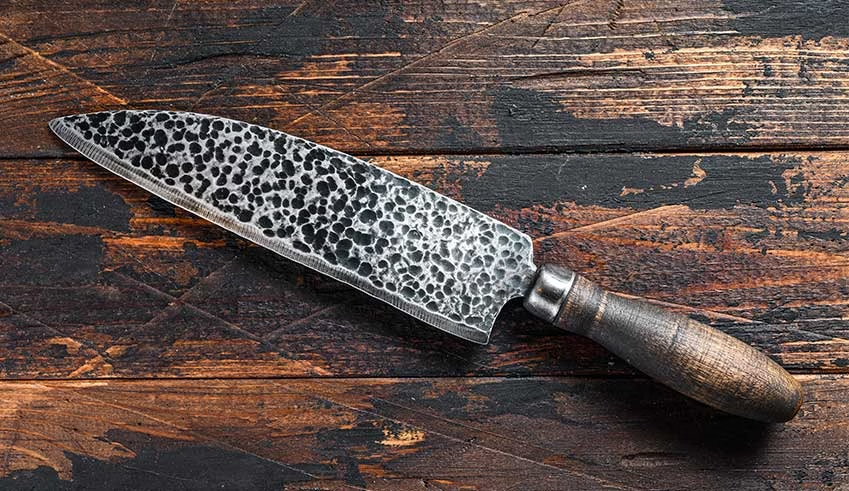
Damascus steel is a type of steel known for its flowing, wavy, water-like patterns on the blade surface. In today’s knife industry, “Damascus steel” usually refers to pattern-welded steel—a blade material made by forge-welding two or more different steels together, then manipulating, grinding, polishing, and etching the blade to reveal layered patterns.
Historically, the term also refers to ancient Wootz steel, a high-carbon crucible steel famous for its natural banded patterns and legendary reputation in Middle Eastern and South Asian blades. Modern Damascus knives are usually not made the same way as ancient Wootz Damascus. They are typically made using layered steel construction.
The short version: Damascus steel is not one single steel grade. It is a blade-making method and visual style. A good Damascus knife can be beautiful, functional, and durable—but its real performance depends on the steels used, heat treatment, blade geometry, and craftsmanship.
Why Damascus Steel Is So Popular
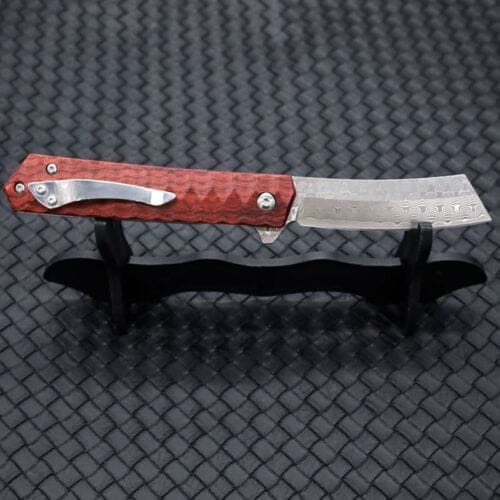
Damascus steel has a look that regular stainless steel or carbon steel cannot easily match. Each blade can have a unique pattern, making it feel more personal and collectible. For many knife enthusiasts, Damascus steel represents a balance between function and art.
A Damascus knife is often chosen for:
- A unique layered blade pattern
- Traditional forging appeal
- Collectible value
- Gift appeal
- Premium visual presentation
- A connection to historical sword and knife making
- The craftsmanship behind the forging process
But looks are only part of the story. If you are buying a Damascus knife for everyday carry, outdoor use, or collecting, you should understand what Damascus steel actually is—and what it is not.
Ancient Damascus vs Modern Damascus Steel
One of the most important things to know is that the word “Damascus” is used in different ways.
Ancient Damascus: Wootz Steel
Ancient Damascus steel is often associated with Wootz steel, a crucible steel produced historically in parts of South India, Central Asia, and the Middle East. Wootz steel developed its pattern from its internal microstructure, not from stacking different steels together.
In simple terms, Wootz Damascus was a single steel material with patterns created through alloy composition, carbide formation, and thermal cycling. Its reputation came from historical swords that were praised for sharpness, toughness, and distinctive surface patterns.
However, true historical Wootz Damascus is rare today. Most modern Damascus knives are not Wootz steel.
Modern Damascus: Pattern-Welded Steel
Modern Damascus steel usually means pattern-welded steel. This process involves layering two or more steels, forge-welding them into one billet, folding or manipulating the billet, and then grinding and etching the blade to reveal contrast between the layers.
Common steels used in modern Damascus may include high-carbon steels, nickel-bearing steels, stainless steels, or a stainless core with Damascus cladding. The exact performance depends heavily on what steels are used and how the blade is heat treated.
This is why two Damascus knives can perform very differently even if they look similar.
How Modern Damascus Steel Is Made
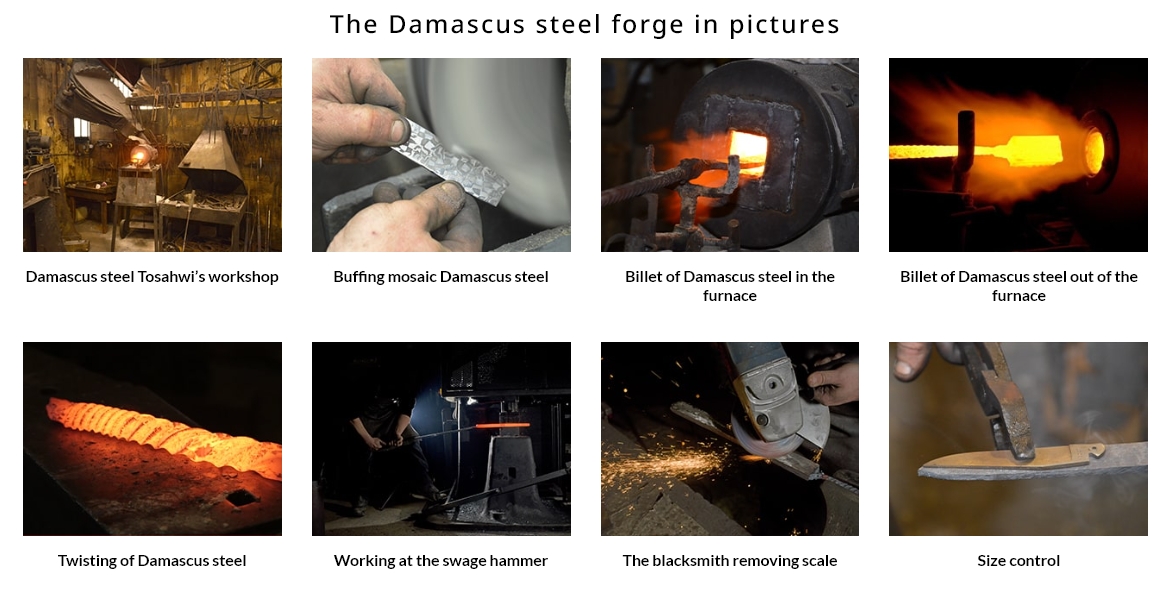
Modern Damascus is usually made through a forge-welding process. While methods vary by maker, the general process looks like this:
1. Steel Selection
The maker chooses two or more steels with different compositions. The contrast between these steels helps create visible patterns after etching. For example, one steel may darken more during etching, while another remains brighter.
2. Stacking the Layers
The steels are stacked into a billet. A simple billet may start with a small number of layers, but after repeated forging, folding, cutting, and restacking, the final blade may have dozens, hundreds, or even more visible layers.
3. Forge Welding
The steel stack is heated to a high temperature and forge-welded together under pressure. The goal is to bond the layers into one solid piece of material.
4. Pattern Manipulation
The maker may twist, ladder, cut, press, or grind the billet to create different patterns. Common Damascus patterns include twist, ladder, raindrop, feather, random, and mosaic.
5. Blade Shaping and Grinding
Once the billet is forged, the blade is shaped, ground, and refined. Blade geometry matters a lot. Even beautiful Damascus will not cut well if the edge geometry is too thick or poorly ground.
6. Heat Treatment
Heat treatment is one of the most important steps. It determines hardness, toughness, edge retention, and overall cutting performance. A poorly heat-treated Damascus blade may look impressive but perform badly.
7. Etching and Finishing
The blade is etched in acid or another solution to reveal the pattern. Different steels react differently, creating the dark and bright contrast that Damascus is known for.
Is Damascus Steel Strong?
Damascus steel can be strong, but “Damascus” by itself does not automatically mean better performance.
A good Damascus knife depends on:
- The steels used
- The quality of the forge welds
- The heat treatment
- The blade geometry
- The edge thickness
- The intended use
- The maker’s skill
High-quality Damascus can be durable, sharp, and reliable. Low-quality Damascus can have weak welds, poor heat treatment, soft edges, or attractive patterns that hide mediocre steel.
So the better question is not “Is Damascus steel strong?” The better question is: What steels are in this Damascus blade, and who made it?
Is Damascus Steel Better Than Regular Steel?
Not always. Damascus steel is not automatically better than regular steel, stainless steel, carbon steel, or modern powder metallurgy steels.
For example, a well-heat-treated S35VN, MagnaCut, M390, D2, or 14C28N blade may outperform a low-quality Damascus blade in edge retention, corrosion resistance, or toughness. On the other hand, a well-made Damascus knife can be an excellent cutting tool and a beautiful collectible.
Here is a simple comparison:
| Steel Type | Main Strength | Main Weakness | Best For |
|---|---|---|---|
| Damascus Steel | Unique pattern, craftsmanship, collectible appeal | Quality depends heavily on steel choice and maker | Collectors, gifts, premium EDC, display pieces |
| Stainless Steel | Corrosion resistance, easy maintenance | Some steels may sacrifice toughness or edge retention | EDC, kitchen, humid environments |
| Carbon Steel | Easy sharpening, strong cutting feel | Can rust without care | Outdoor knives, traditional knives, users who maintain their tools |
| Powder Steel | High performance, edge retention, advanced metallurgy | More expensive, harder to sharpen | Premium EDC, performance-focused users |
If you want the best visual impact, Damascus is hard to beat. If you want maximum edge retention or corrosion resistance, you should compare the actual steel composition and heat treatment rather than choosing by appearance alone.
Does Damascus Steel Rust?
Yes, Damascus steel can rust, especially if it is made from high-carbon steels. Some stainless Damascus steels offer better corrosion resistance, but “Damascus” does not automatically mean stainless.
A Damascus knife should be kept clean and dry. After use, wipe the blade carefully and apply a thin layer of protective oil if the knife will be stored for a long time. This is especially important if the knife is used around moisture, sweat, food acids, saltwater, or humid outdoor conditions.
Basic Damascus knife care:
- Wipe the blade dry after use
- Avoid leaving fingerprints or moisture on the blade
- Do not store the knife wet
- Apply a light coat of knife oil for storage
- Avoid dishwashers or harsh cleaners
- Use a soft cloth when cleaning
- Store the knife in a dry place
For folding Damascus knives, also keep the pivot area clean and lightly lubricated.
Common Damascus Steel Patterns
The pattern is one of the biggest reasons people love Damascus knives. Different forging and grinding techniques create different visual effects.
Random Pattern
This is one of the most common Damascus patterns. It has organic, flowing lines that look natural and unpredictable.
Ladder Pattern
A ladder pattern has repeated horizontal or stepped lines across the blade. It is created by cutting or pressing grooves into the billet before grinding.
Twist Pattern
A twist pattern is made by twisting the steel billet before forging it flat. The result can look like spirals, waves, or flowing ropes.
Raindrop Pattern
Raindrop Damascus has circular or droplet-like shapes across the surface. It is often created by drilling, pressing, or manipulating the billet before final grinding.
Feather Pattern
Feather Damascus is more complex and often more expensive. It has a symmetrical, feather-like appearance and requires advanced forging control.
Mosaic Damascus
Mosaic Damascus can create very detailed, artistic patterns. It may involve complex billet arrangements and is often used in custom knives or collector pieces.
Pattern choice is mostly aesthetic. A ladder pattern is not automatically stronger than a twist pattern, and a high layer count does not automatically mean better cutting performance.
Does Layer Count Matter?
Layer count affects appearance, but it does not guarantee quality.
A knife with 300 layers is not automatically better than a knife with 100 layers. The final performance still depends on the steel composition, forge weld quality, heat treatment, grind, and edge geometry.
Layer count can influence how fine or bold the pattern looks. More layers may create a tighter, more detailed pattern. Fewer layers may create a bolder, more dramatic look. Neither is automatically superior.
When buying a Damascus knife, do not judge by layer count alone.
Real Damascus vs Fake Damascus: How to Tell the Difference
Because Damascus steel is popular, there are also cheap imitations. Some blades may have a printed, laser-etched, or surface-only pattern that does not come from true layered steel.
Here are signs of a better Damascus knife:
- The seller clearly states the steels used
- The pattern continues naturally across the blade surface
- The blade has proper finishing and clean grind lines
- The maker or brand explains the construction
- The knife has realistic claims, not exaggerated “lost super steel” marketing
- The price matches the material and craftsmanship
- Reviews mention cutting performance, not just appearance
Red flags include:
- No steel information
- Unrealistically cheap pricing for “handmade Damascus”
- Claims that the blade “never rusts”
- Claims that Damascus is always stronger than all modern steels
- Pattern that looks printed or too flat
- Poor fit and finish
- No care instructions
A trustworthy Damascus knife listing should explain what the knife is made of, what it is designed for, and how to maintain it.
What Is Damascus Cladding?
Some knives are made with a hard core steel and Damascus cladding on the outside. This is common in kitchen knives and some premium folding knives.
In this construction, the cutting edge may come from the core steel, while the Damascus layers provide the visual pattern on the blade face. This can be a smart design because the maker can use a high-performance core steel while still offering the look of Damascus.
When buying this type of knife, check the core steel. The core steel usually matters most for edge retention and cutting performance.
Is Damascus Steel Good for EDC Knives?
Yes, Damascus steel can be good for EDC knives if the knife is properly made and maintained.
A Damascus EDC knife is a great choice if you want:
- A unique blade appearance
- A premium pocket knife
- A collector-friendly EDC
- A gift-quality knife
- A blade that stands out from standard satin or black finishes
However, if you need a hard-use knife for wet, dirty, or low-maintenance conditions, you may prefer a stainless steel such as 14C28N, S35VN, S45VN, MagnaCut, or M390 depending on your budget and intended use.
For everyday carry, Damascus is best for users who appreciate both design and maintenance. It is not the best choice for people who want to use a knife heavily and never clean it.
Damascus Steel for Outdoor and Survival Knives
Damascus can be used for outdoor knives, but quality matters even more. Outdoor knives may face moisture, wood, dirt, food, and repeated impact. A decorative Damascus blade with poor heat treatment is not ideal for survival use.
If you want a Damascus outdoor knife, look for:
- A reputable maker or brand
- Clear steel information
- Good handle grip
- Strong blade geometry
- Proper sheath
- Realistic use case
- Good corrosion care routine
For heavy chopping, batoning, or survival tasks, toughness and heat treatment are more important than pattern.
How to Sharpen a Damascus Knife
You can sharpen a Damascus knife much like other steel knives, but take care not to scratch the blade finish unnecessarily.
Basic sharpening tips:
- Use a quality sharpening stone or guided sharpening system.
- Match the existing edge angle when possible.
- Avoid aggressive grinding unless needed.
- Do not over-polish the blade face unless you know how to restore the etch.
- Clean and dry the blade after sharpening.
- Apply a light oil if the steel is carbon-based.
The Damascus pattern is usually revealed by etching. Heavy sanding, polishing, or abrasive cleaning can reduce the contrast of the pattern. If the pattern becomes faded, it may need professional refinishing or re-etching.
Pros and Cons of Damascus Steel Knives
Pros
- Beautiful and unique blade patterns
- Strong visual identity
- Great for collectors and gifts
- Often associated with skilled craftsmanship
- Can perform well when made with quality steels
- Each blade may look slightly different
Cons
- Quality varies widely
- Not automatically better than modern steels
- Some Damascus can rust
- Cheap imitations exist
- May require more maintenance
- Pattern can fade if improperly polished or cleaned
- Good Damascus is often more expensive
How to Choose a Good Damascus Knife
Before buying a Damascus knife, ask these questions:
1. What steels are used?
A good product page should tell you what steels are in the blade. If the listing only says “premium Damascus” without details, be cautious.
2. Is it true layered steel or only a surface pattern?
Real pattern-welded Damascus is made from layered steel. A surface-only pattern does not offer the same craftsmanship.
3. What is the knife designed for?
A Damascus gentleman’s folder, chef knife, hunting knife, and outdoor fixed blade all have different requirements. Choose based on your use case.
4. Is the heat treatment reliable?
Heat treatment has a major effect on performance. Even expensive steel can perform poorly if heat treated badly.
5. Is the handle suitable?
A beautiful blade still needs a comfortable, secure handle. For EDC and outdoor use, pay attention to grip, ergonomics, and carry comfort.
6. Does the brand provide care instructions?
Trustworthy brands help customers understand how to maintain Damascus steel. This is especially important for carbon-based Damascus.
Damascus Steel Myths
Myth 1: Damascus steel is always stronger than modern steel.
Not true. Some modern steels can outperform Damascus in edge retention, toughness, corrosion resistance, or all-around balance.
Myth 2: More layers always mean better quality.
Not true. Layer count affects pattern, but performance depends on steel choice, heat treatment, and geometry.
Myth 3: Damascus never rusts.
Not true. Many Damascus blades can rust, especially carbon steel Damascus.
Myth 4: All Damascus knives are handmade.
Not necessarily. Some are handmade, some are semi-production, and some are mass-produced.
Myth 5: Damascus is only for display.
Not true. High-quality Damascus can be very functional, but you must choose carefully.
Is Damascus Steel Worth It?
Damascus steel is worth it if you value craftsmanship, visual character, and a blade that feels different from a standard production knife. It is especially worth considering for collectors, gifts, premium EDC knives, and users who enjoy maintaining their tools.
Damascus may not be worth it if your only priority is maximum cutting performance per dollar. In that case, a high-quality modern stainless or powder steel may be a better choice.
The best reason to buy Damascus is not because it is magically superior. The best reason is because it combines function, history, craftsmanship, and visual personality in a way few blade materials can match.
Final Thoughts
Damascus steel is one of the most recognizable and misunderstood materials in the knife world. Historically, it is connected to legendary Wootz steel blades. In the modern knife industry, it usually refers to pattern-welded steel made by layering and forge-welding different steels together.
A good Damascus knife can be beautiful, sharp, and reliable. But the pattern alone does not determine performance. When choosing a Damascus knife, look beyond the surface. Pay attention to the steels used, heat treatment, blade geometry, handle design, fit and finish, and care requirements.
If you want a knife with character, craftsmanship, and a unique blade pattern, Damascus steel is one of the most compelling choices available.
Frequently Asked Questions About Damascus Steel
What is Damascus steel made of?
Modern Damascus steel is usually made from two or more steels forge-welded together. The different steels create contrast after etching, revealing the blade’s layered pattern.
Is Damascus steel real?
Yes, real Damascus steel exists. However, the term can mean different things. Ancient Damascus usually refers to Wootz steel, while modern Damascus usually refers to pattern-welded steel.
Is Damascus steel good for knives?
Yes, Damascus steel can be good for knives when made with quality steels, proper heat treatment, and good blade geometry. Poor-quality Damascus may look attractive but perform badly.
Does Damascus steel rust?
Yes, many Damascus knives can rust, especially those made from high-carbon steels. Keep the blade clean, dry, and lightly oiled when stored.
Is Damascus steel better than stainless steel?
Not automatically. Damascus is often chosen for beauty and craftsmanship. Stainless steel may be better for corrosion resistance and lower maintenance.
Why is Damascus steel expensive?
Damascus steel can be expensive because it requires extra forging, layering, pattern control, finishing, and etching. Complex patterns and skilled craftsmanship increase cost.
Can you use a Damascus knife every day?
Yes, a well-made Damascus folding knife can be used as an everyday carry knife. Just remember to clean and dry the blade after use.
How do you clean a Damascus knife?
Wipe it with a soft cloth, dry it completely, and apply a thin layer of knife oil if needed. Avoid dishwashers, harsh chemicals, and abrasive scrubbing.
Does the Damascus pattern affect performance?
Usually, the pattern itself is mostly visual. Performance depends more on the steel composition, heat treatment, grind, and edge geometry.
What should I look for when buying a Damascus knife?
Look for clear steel information, real layered construction, reliable heat treatment, good fit and finish, realistic claims, and proper care instructions.